Springtails vs Isopods: Which Is Better for Bioactive Terrariums?
The debate of springtails vs isopods is common among bioactive terrarium keepers. Both are essential microfauna, but they serve different roles in maintaining a healthy ecosystem.
If you are building a bioactive setup, understanding the difference between springtails and isopods will help you create a more stable and self-sustaining environment.
In this guide, we compare springtails vs isopods, explain their differences, and help you decide which one is better for your specific setup.
Springtails vs isopods: key differences
Understanding the difference between springtails and isopods is essential for building a balanced bioactive terrarium ecosystem.
Although both species act as a cleanup crew, their behavior and function are not the same.
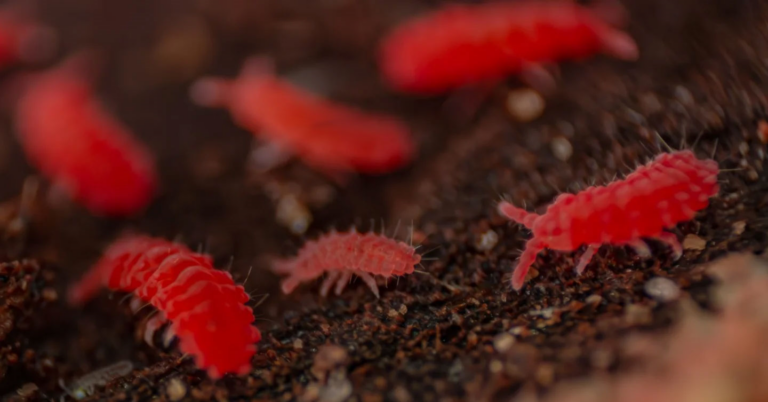
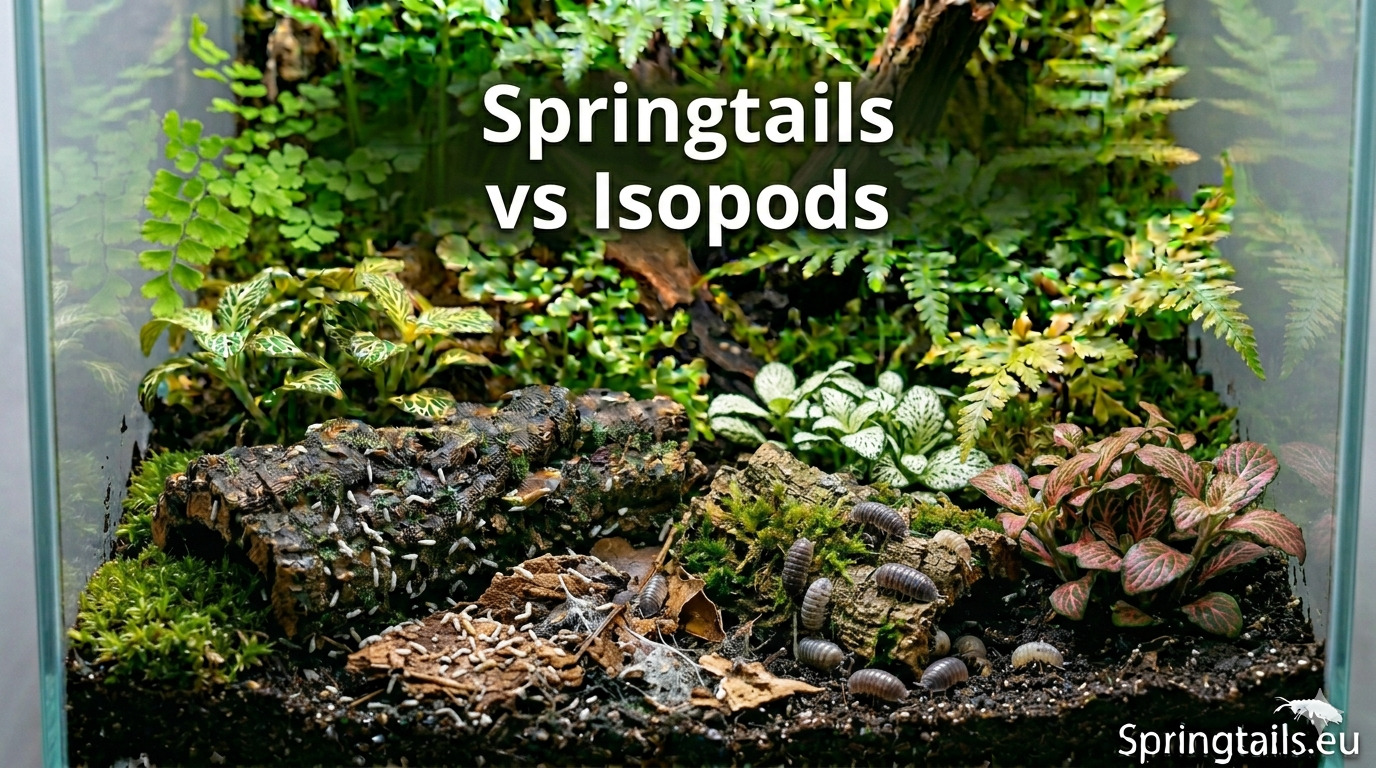
- Springtails: microscopic, fast reproducing, focus on mold and fungi
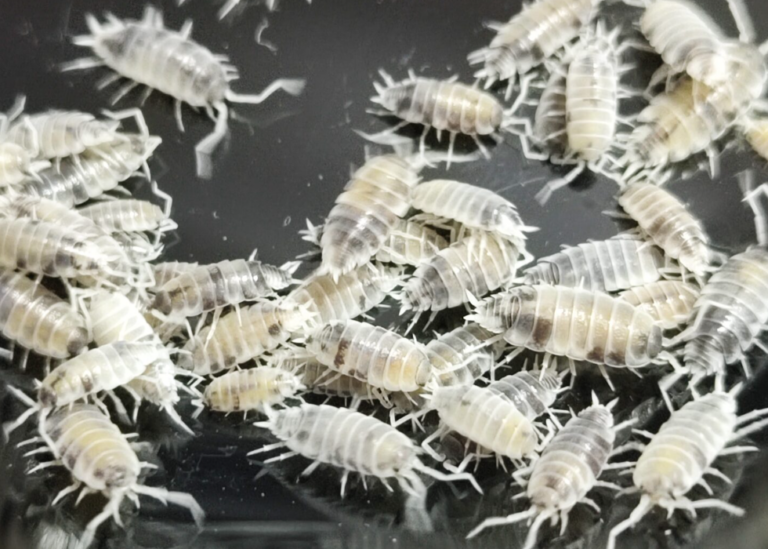
- Isopods: larger, slower reproducing, consume organic waste and leaf litter
Instead of replacing each other, they work better together.
What do springtails do in a bioactive terrarium?
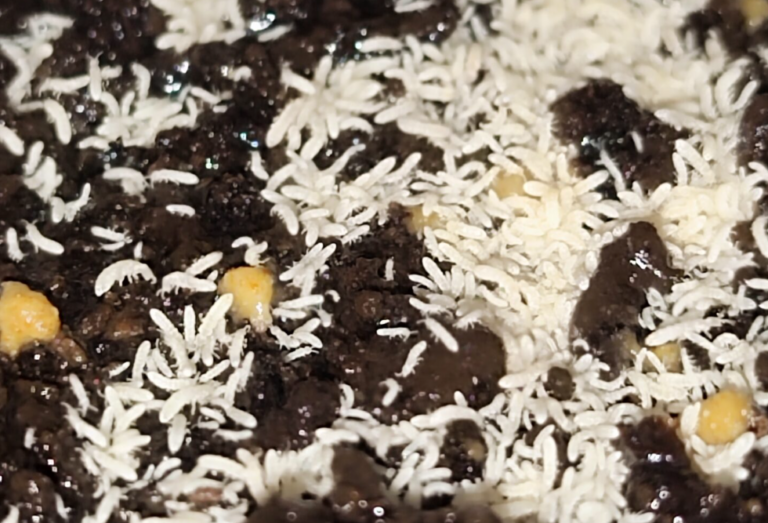
Springtails are microfauna that specialize in controlling mold and breaking down microscopic organic matter.
They reproduce quickly and spread through the substrate, creating a stable base for any bioactive system.
If you want to add them to your bioactive setup, you can buy live cultures here:
👉 Buy springtails for bioactive terrariums
Learn more about their role here:
springtails in bioactive terrariums.
What do isopods do in a bioactive terrarium?
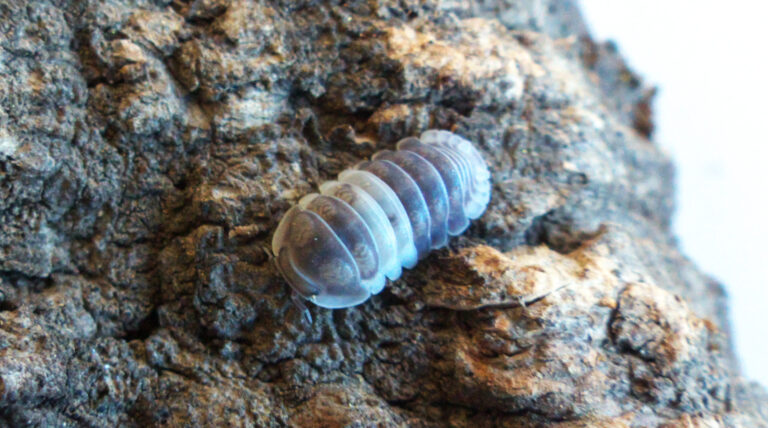
Isopods are macrofauna that consume larger organic debris such as leaf litter, wood, and animal waste.
They are visible and add activity to the terrarium, making them popular for both function and aesthetics.
Isopods also help recycle nutrients, improving soil quality over time.
If you want to add them to your bioactive setup, you can buy live cultures here:
👉 Buy isopods for bioactive terrariums
Springtails vs isopods for beginners
When comparing springtails vs isopods for beginners, springtails are usually the easiest option.
- Require less space
- Reproduce faster
- Need minimal maintenance
If you are just starting, check this guide:
best springtails for beginners.
Springtails vs isopods: do you need both?
In most cases, the answer in the springtails vs isopods debate is yes.
Springtails and isopods complement each other perfectly. Springtails handle mold and micro-waste, while isopods break down larger organic materials.
Using both creates a balanced ecosystem that requires less maintenance and stays cleaner over time.
Common mistakes when using springtails and isopods
- Not enough humidity (both need moisture)
- Overfeeding (causes mold issues)
- Too small enclosure for isopods
If your springtails are not growing properly, read:
springtails not reproducing.
Boosting your bioactive setup
To maximize results, you should support your microfauna with proper feeding.
This helps maintain stable populations and improves reproduction.
External resource
Tip: The best bioactive terrariums combine both springtails and isopods. Together, they create a natural and self-sustaining ecosystem.