Are Springtails Safe for Reptiles and Plants?
Springtails are one of the most widely used microfauna in bioactive terrariums and planted ecosystems. However, many beginners still ask the same question: are springtails safe for reptiles and plants?
The short answer is yes. Springtails are completely harmless to reptiles, amphibians, invertebrates, and plants. In fact, they are considered one of the most beneficial organisms you can introduce into a terrarium or vivarium.
These tiny soil-dwelling arthropods play a key role in maintaining a balanced ecosystem. They break down organic waste, control mold growth, and improve the health of the substrate. Because of these benefits, springtails are commonly used in bioactive terrariums around the world.
If you want to introduce them into your setup, you can buy springtails cultures in Europe here and start building a healthy bioactive ecosystem.
In this guide, we will explain why springtails are safe for reptiles and plants, how they interact with your terrarium environment, and why they are essential for healthy bioactive setups.
What Are Springtails and Why Are They Safe for Reptiles and Plants?
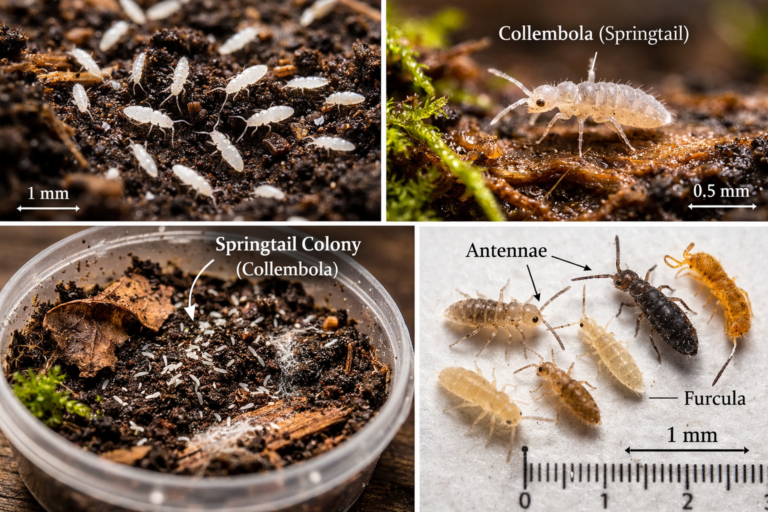
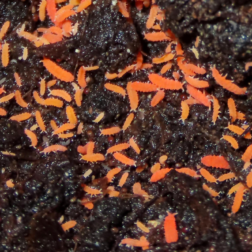
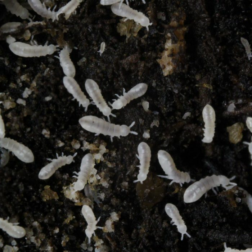
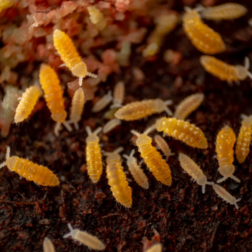
Springtails are microscopic hexapods belonging to the subclass Collembola. They are commonly found in natural soil environments such as forests, gardens, and leaf litter.
Although they are often mistaken for insects, springtails belong to their own unique group of arthropods. Their name comes from a specialized structure called a furcula, which allows them to jump when disturbed.
Most springtails measure between 0.5 mm and 3 mm, making them almost invisible to the naked eye in many cases.
In natural ecosystems and terrariums, springtails act as decomposers. Their diet mainly consists of:
- Mold and fungal spores
- Decaying plant material
- Organic waste
- Microorganisms present in the soil
This feeding behavior makes them extremely valuable in maintaining a clean and balanced micro-ecosystem.
According to scientific research, springtails play a key role in soil ecosystems and nutrient cycling (source: Springtails – Collembola).
Are Springtails Safe for Reptiles?
Yes, springtails are completely safe for reptiles. They do not bite, sting, or harm reptiles in any way.
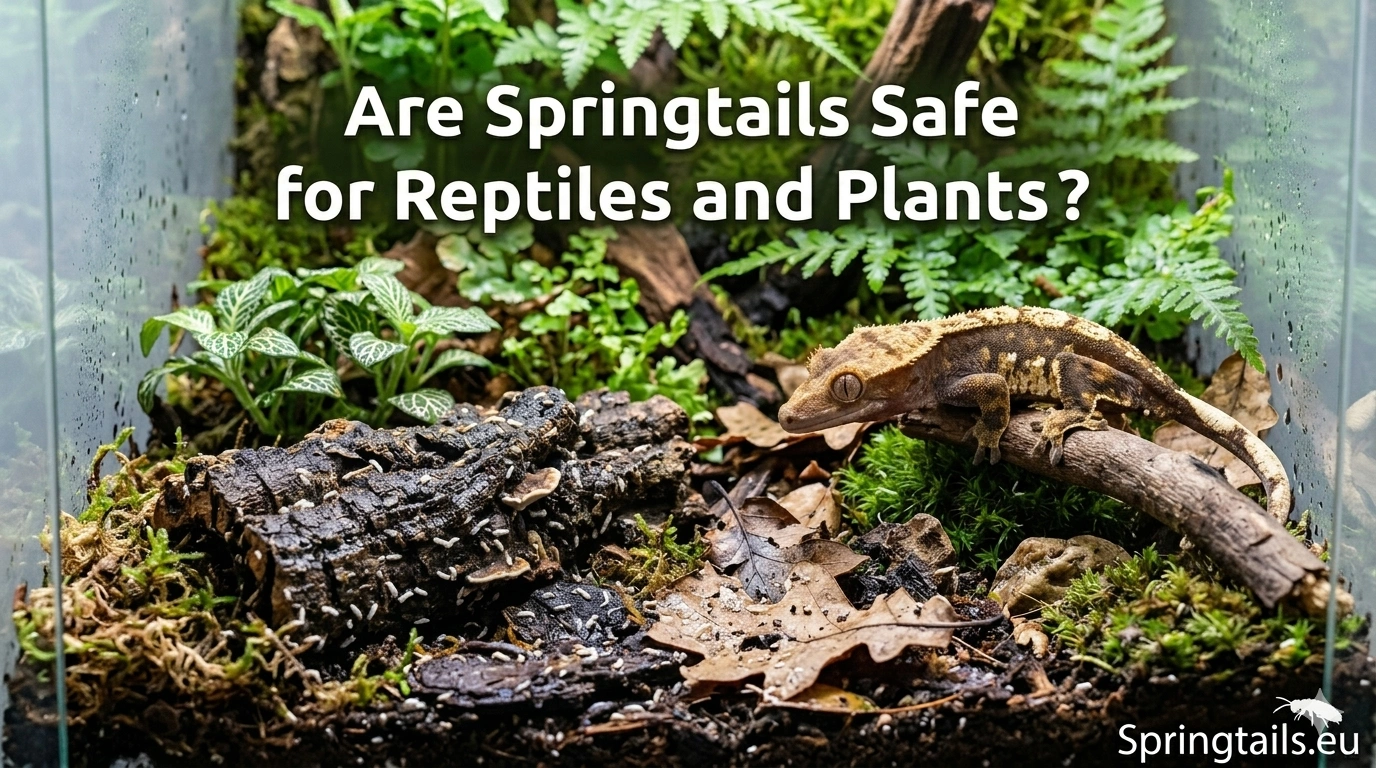
Most reptiles simply ignore them because springtails are extremely small. In some cases, small reptiles or amphibians may occasionally eat them, but this is perfectly safe.
Springtails are commonly used in terrariums that house animals such as:
- Geckos
- Dart frogs
- Small lizards
- Amphibians
- Bioactive reptile setups
Because springtails feed on organic waste, they help reduce the buildup of debris inside the enclosure. This helps maintain better hygiene and reduces the chance of mold problems.
For reptile keepers, springtails are an important part of the terrarium clean-up crew.
Are Springtails Safe for Plants?
Springtails are also completely safe for plants. Unlike harmful soil pests, they do not attack living plant tissue.
Instead, they feed on decomposing organic matter and microorganisms present in the substrate. Because of this, they actually help create healthier soil conditions for plants.
Springtails contribute to plant health in several ways:
- They help decompose organic material into nutrients.
- They improve microbial balance in the soil.
- They help control mold and fungi.
- They contribute to natural soil aeration.
In nature, springtails are a normal and important component of healthy soil ecosystems. Many terrarium builders and plant enthusiasts intentionally add them to their substrates.
Why Springtails Are Safe for Reptiles and Plants in Bioactive Terrariums
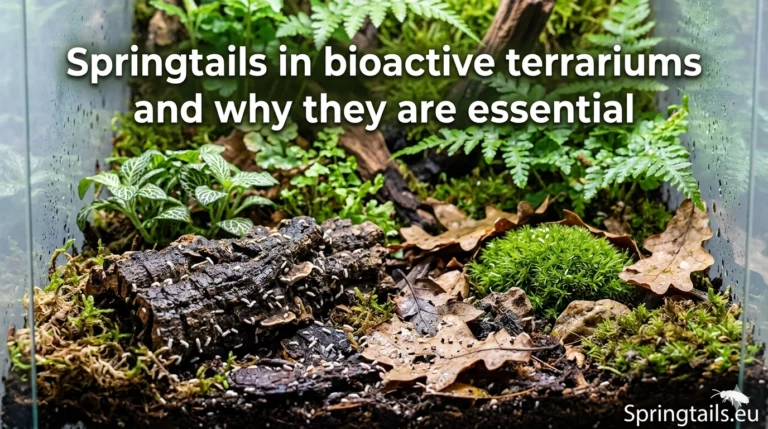
Bioactive terrariums aim to replicate a self-sustaining ecosystem where plants, animals, and microorganisms work together to maintain balance.
Springtails play a fundamental role in this system.
They are usually introduced together with isopods, forming the foundation of the terrarium clean-up crew.
Mold Control
One of the biggest advantages of springtails is their ability to feed on mold and fungal growth. This helps prevent mold outbreaks that can occur in humid terrarium environments.
Waste Decomposition
Springtails break down organic waste such as shed skin, leftover food, and dead plant material. This process helps keep the substrate cleaner over time.
Improved Soil Health
By participating in the decomposition process, springtails help release nutrients back into the substrate. This supports plant growth and contributes to a healthier soil ecosystem.
Can Springtails Become a Problem?
Springtails rarely cause problems in terrariums or plant environments. Their populations naturally regulate themselves based on the availability of food.
If there is less organic matter available, the population will simply stabilize or decrease.
Even when their numbers temporarily increase in very humid environments, they remain completely harmless to reptiles and plants.
In most cases, a visible springtail population simply indicates that the terrarium ecosystem is biologically active and functioning properly.
Do Reptiles Eat Springtails?
Some reptiles and amphibians may occasionally eat springtails, especially smaller species.
Because of their tiny size, they are usually considered micro-prey rather than a primary food source.
Animals that may occasionally eat springtails include:
- Dart frogs
- Juvenile geckos
- Small amphibians
This behavior is completely natural and safe.
How to Use Springtails Safely for Reptiles and Plants
Adding springtails to a terrarium is very simple.
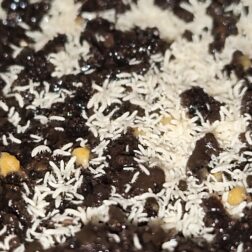
Most springtail cultures are sold in containers with charcoal, clay, or soil substrate.
To introduce them into a terrarium:
- Open the culture container.
- Pour a portion of the colony onto the terrarium substrate.
- Maintain moderate humidity.
- Provide organic material such as leaf litter.
Springtails will quickly spread throughout the enclosure and establish a stable population.
FAQ: Springtails Safe for Reptiles and Plants
Can springtails harm reptiles?
No, springtails are completely harmless and do not bite or irritate reptiles.
Are springtails bad for plants?
No, they actually improve soil quality and help plants grow healthier.
Do springtails control mold?
Yes, they feed on mold and fungi, helping keep terrariums clean.
So, are springtails safe for reptiles and plants?
Absolutely. Springtails are harmless, beneficial microfauna that help maintain a clean and balanced ecosystem inside terrariums and planted environments.
They control mold, break down organic waste, and improve soil health. Because of these benefits, they are considered an essential component of bioactive terrariums.
For reptile keepers and plant enthusiasts alike, springtails are not only safe — they are one of the best natural tools for creating a thriving ecosystem.