
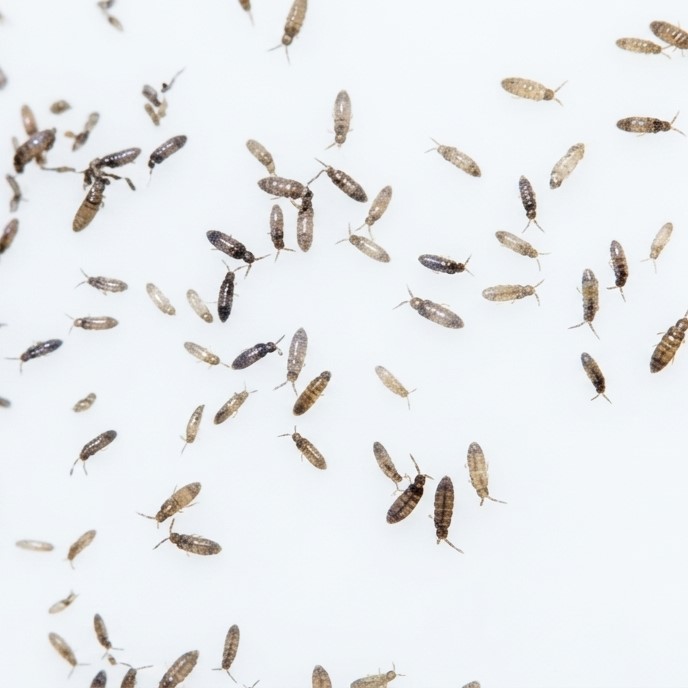
Lepidocyrtus sp. “Bullet”
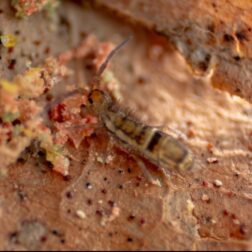
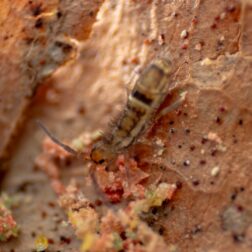
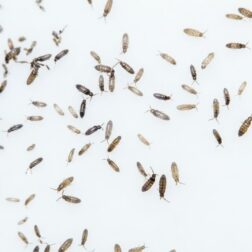
Lepidocyrtus sp. “Bullet” is an active and attractive springtail that performs particularly well in lower-humidity environments. Its distinctive appearance and jumping behaviour make it an interesting choice for bioactive terrariums and springtail collections. Although it may be related to Lepidocyrtus cyaneus, its exact species identification has not been confirmed.
⚠️ Live animals ⚠️
Express shipping includes full DOA guarantee.
Standard shipping includes replacement only.
- Preparation time: 1-5 days
- Clean products: Our farms are free of other insects
- Free Shipping: On all orders over 300€
Lepidocyrtus sp “Bullet”
Lepidocyrtus sp “Bullet” is an active and distinctive springtail that is particularly interesting for bioactive terrariums, springtail collections and microfauna enthusiasts. One of the most useful characteristics of Lepidocyrtus sp. “Bullet” is its ability to perform well in lower-humidity environments, making it a great option for setups where other springtails may struggle with drier conditions.
The name Lepidocyrtus sp “Bullet” is used to identify this particular culture while keeping the species identification appropriately cautious. The specimens show similarities to Lepidocyrtus cyaneus, but we do not currently consider this identification confirmed. For this reason, we prefer to sell this culture as Lepidocyrtus sp. “Bullet” rather than making an unconfirmed species-level identification.
You can explore more species from the same general group in our Entomobryomorpha springtails collection.
Lepidocyrtus sp “Bullet” – A Distinctive Springtail
Lepidocyrtus sp. “Bullet” belongs to the genus Lepidocyrtus, a diverse group of springtails known for their elongated bodies, active behaviour and ability to jump when disturbed.
These springtails are particularly interesting to observe when they are active on the surface of the substrate. Their movement and distinctive appearance make them an attractive addition to established bioactive enclosures and dedicated springtail cultures.
Why “Bullet”?
We use “Bullet” as the culture name for this particular strain. This makes it possible to clearly distinguish these springtails from other Lepidocyrtus cultures while avoiding an uncertain species identification.
Some characteristics of this culture appear compatible with Lepidocyrtus cyaneus, but the identification has not been confirmed. Therefore, Lepidocyrtus sp. “Bullet” is the name used for this culture, while Lepidocyrtus cyaneus should only be considered a possible identification.
For general taxonomic information about the genus, you can consult the Lepidocyrtus Wikipedia page.
Lepidocyrtus sp. “Bullet” for Bioactive Terrariums
Lepidocyrtus sp. “Bullet” can be used as part of the clean-up crew in a bioactive terrarium. Springtails feed on microorganisms, organic matter and suitable food sources within their environment, helping to recycle organic material as part of the terrarium ecosystem.
Their active behaviour also makes them enjoyable to observe, especially when a healthy population is established and individuals can be seen moving across the substrate and enclosure surfaces.
Lepidocyrtus sp. “Bullet” is particularly interesting for keepers who want a springtail that can perform well without maintaining extremely high humidity throughout the entire enclosure.
Care and Maintenance
Lepidocyrtus sp. “Bullet” performs well under relatively low-humidity conditions. This makes the culture especially useful for keepers working with drier terrariums or setups where excessive moisture is undesirable.
Although Lepidocyrtus sp. “Bullet” tolerates lower humidity well, access to moisture should still be available. Providing a moisture gradient is a good way to allow the springtails to find suitable conditions within their culture or terrarium.
- Temperature: approximately 20–26 °C.
- Humidity: performs well in relatively low-humidity conditions while still benefiting from access to a moist area.
- Substrate: a suitable springtail substrate, such as a coconut fibre-based medium, can be used.
- Food: provide suitable springtail food in small amounts on a regular basis.
- Ventilation: good ventilation is recommended, especially when maintaining lower humidity.
- Culture conditions: maintain stable conditions and avoid excessive food accumulation.
Low-Humidity Springtail
One of the main advantages of Lepidocyrtus sp. “Bullet” is its tolerance of relatively dry conditions. Many commonly kept springtails are associated with very humid environments, while this culture can perform well when humidity is kept lower.
This makes Lepidocyrtus sp. “Bullet” a useful choice for bioactive setups where maintaining a constantly wet substrate is not desirable. A suitable moisture area should still be provided so the colony has access to the humidity it needs.
For keepers maintaining different types of terrariums, this lower-humidity tolerance can make Lepidocyrtus sp. “Bullet” a useful alternative to springtails that prefer consistently moist conditions.
Active and Jumping Behaviour
Lepidocyrtus sp. “Bullet” is an active springtail and can move quickly across the surface of its culture. When disturbed, individuals may jump rapidly using their furcula, a characteristic feature of many Entomobryomorpha springtails.
This active behaviour makes the culture particularly interesting to observe and also helps distinguish it from slower-moving springtail species.
Species Identification
This culture is intentionally sold as Lepidocyrtus sp. “Bullet” rather than as a confirmed species. The specimens show characteristics that may be consistent with Lepidocyrtus cyaneus, but we have not established the identification with sufficient certainty to use the species name commercially.
For this reason, “Bullet” should be considered the culture name. The reference to Lepidocyrtus cyaneus indicates only a possible relationship or identification and should not be interpreted as confirmation that this culture is Lepidocyrtus cyaneus.
Feeding Lepidocyrtus sp. “Bullet”
Lepidocyrtus sp. “Bullet” can be maintained with suitable springtail food provided in small quantities. As with other springtail cultures, it is better to provide controlled amounts of food rather than allowing large quantities to accumulate in the culture.
A suitable diet can help maintain a healthy and reproducing colony. The exact feeding frequency will depend on colony size, temperature, substrate conditions and how quickly the available food is consumed.
Perfect for Springtail Collections
If you are looking for an active springtail with a distinctive appearance and good tolerance of lower-humidity conditions, Lepidocyrtus sp. “Bullet” is an excellent addition to a springtail collection.
Its active behaviour, interesting appearance and unusual humidity tolerance make it particularly appealing to keepers who want to maintain less commonly available springtails or use microfauna in terrariums with different environmental conditions.
Quick Facts About Lepidocyrtus sp. “Bullet”
- Culture name: Lepidocyrtus sp. “Bullet”
- Genus: Lepidocyrtus
- Possible identification: Lepidocyrtus cyaneus (not confirmed)
- Type: Springtail
- Order: Entomobryomorpha
- Behaviour: Active and capable of jumping when disturbed
- Humidity tolerance: Performs well in relatively low-humidity conditions
- Uses: Bioactive terrariums, clean-up crew and springtail collections
Order Lepidocyrtus sp. “Bullet”
We carefully breed and maintain our Lepidocyrtus sp. “Bullet” cultures before shipping. Each order is prepared with care to ensure that the springtails arrive in good condition and are ready to establish in their new environment.
Whether you are building a bioactive terrarium, expanding a springtail collection or simply looking for an active species that performs well with lower humidity, Lepidocyrtus sp. “Bullet” is an interesting and versatile choice.
Please note: this culture is sold under the name Lepidocyrtus sp. “Bullet” because the exact species identification has not been confirmed. The mention of Lepidocyrtus cyaneus refers only to a possible identification and should not be interpreted as a confirmed species identification.
Be the first to review “Lepidocyrtus sp. “Bullet””
You must be logged in to post a review.
Related products
-
Yuukianura aphoruroides
Price range: 4,99 € through 79,99 € -
Orchesella flavescens
Price range: 29,99 € through 219,99 € -
Lobellini sp. “Pennywise”
Price range: 199,99 € through 999,99 € -
Cubaris sp. “Panda King”
Price range: 19,99 € through 34,99 € -
Orchesella cincta
Price range: 9,99 € through 69,99 €
Reviews
There are no reviews yet.